

Design Dialogues
Rethinking The Rooftop
By Renée Soucy
Image Provided by Harrison Green
The growing need to convert underutilized city center office buildings into residential spaces, driven by ongoing pressure on existing urban housing stock, has brought renewed attention to exterior areas previously overlooked, especially the rooftop. Concurrently, a broader cultural shift, where the physical and psychological benefits of spending time outdoors have become widely recognized, has further elevated the importance of these spaces. Alongside this, advancements in outdoor systems and furnishings are enabling these environments to operate at unprecedented levels of performance.
Within this convergence, the rooftop is no longer incidental, but increasingly central to how urban life is experienced: a place to relax, prepare meals, and gather. To further explore the challenges and opportunities involved in designing for rooftop spaces, we gathered three of today’s leading voices working across landscape design, architecture, and development: Robert Green of Harrison Green, whose work spans New York’s private gardens and urban landscapes; Peter White of Boston’s ZEN Associates, known for his holistic and globally influenced approach to outdoor living; and Rob Spanier, President of the Spanier Group, a Toronto-based development advisory firm focused on large-scale placemaking and mixed-use environments.
Together, they explored how rooftop spaces are being redefined, and what it takes to shape them into environments that support daily life while contributing to the urban skyline and, potentially, property values.
New Perspectives on Living Space
What was once considered residual, inaccessible space dedicated to water tanks, HVAC equipment, and other purely functional infrastructure is increasingly being reimagined as not only part of the living environment, but as a defining layer of contemporary urban life.
Peter White described this shift not as developing an addition per se, but as a continuation of the home itself: “We’re always looking to expand the client’s living space from the inside to the outside… The rooftop is a big part of that square footage, and clients are asking how we can make the best use of that space and make it very personal.”
That expansion is not only spatial, but behavioral. As urban interiors become more compact, outdoor environments are asked to do more: to host, restore, and function as everyday space rather than occasional retreat.
For Rob Spanier, this reflected a broader urban condition. “We’re seeing what I call vertical neighborhoods,” he explained. “The quality of life isn’t just about the unit itself, but the spaces around it—the amenity spaces and rooftop patios that let people live more fully, even in smaller footprints.”

Image Credit: Nicholas Calcott
From Amenity to Essential
As expectations evolve, rooftop space—once considered purely an amenity or add-on—now holds the promise of providing the kind of experiences which intrinsically support a more balanced way of life. Green framed this in both practical and human terms: “In cities like New York, access to green space is limited, so rooftop gardens offer a vital connection to nature and help with well-being, relaxation, and even productivity.”
That multifunctionality increasingly includes resident participation. Foraging elements, personal allotments and edible gardens are becoming more common (visit “Designing from Plan to Plate” with Green’s former colleague Clay Gruber for a deep-dive into this topic).
Spanier saw this as part of a broader cultural shift toward greater engagement with the environment: “When people are involved in the process—whether it’s growing herbs, tending a small garden, or even just understanding where things come from—they start to care more about the space.”
At the same time, the boundary between interior and exterior continues to dissolve. White pointed to the role of materials and systems in enabling that continuity: “We encourage clients to think about the outside like a living room or a kitchen… You can create an outdoor living space in a compact area that functions like an extended dining area or living room.”

Image Provided by the Spanier Group
The Kitchen as Anchor
Among the elements shaping rooftop design, the outdoor kitchen has emerged as a defining feature. What was once a solitary grill positioned at the edge of a terrace has evolved into a more integrated system around which the space is now planned. Spanier reflected on how dramatically this has shifted expectations: “You think about the old days of the barbecue that was chained to the pole… and what’s so exciting now is how much that has evolved. Places to gather, places to connect, places to cook; those are the things we’re seeing.”
This evolution is not simply about equipment, but about proximity and interaction. Rather than separating cooking from social space, the kitchen increasingly supports a more shared and participatory experience.
White noted that this shift had been enabled not only by changing expectations, but by the maturation of the systems themselves. Where custom millwork once dominated, it often struggled to perform under exposure. As White explained, “what you often get is a heavily built product that the weather takes a toll on… Moisture, bugs, and wear start to affect it.” By contrast, purpose-built systems offer a more durable and consistent approach.
Spanier shared his own personal experience of this change: “I’m a proud Urban Bonfire owner… I won’t recommend something unless I’ve tested it myself… five years in, everything still performs—the doors close properly, the materials haven’t weathered.” For him, the value extended beyond durability to adaptability: “the most exciting part is the modularity… If there was to be a problem, it’s one panel (being replaced) versus an entirely new kitchen.”
Taken together, these shifts position the outdoor kitchen as an organizing principle in rooftop design—one that anchors social interaction and reinforces the role of these spaces as meaningful extensions of urban living.

Design Within... Constraints
For all their potential, rooftop environments remain among the most complex to execute. Structural limitations, environmental exposure, and regulatory requirements all shape what is possible and demand early clarity.
Green emphasized that the process begins with recognizing constraints, not elaborating concepts: “The first thing we have to understand is what the building can actually support. That informs everything—how much soil you can have, what kind of planting is possible, how many people the space can accommodate.” Meanwhile, White reinforced the importance of coordination, particularly in relation to structure and code: “If you’re not engaging with the structural and regulatory aspects early on, you’re setting yourself up for problems later.”
Exposure, use, and access all demand materials and systems that are both resilient and precise. Elevated conditions introduce a microclimate that behaves differently from ground-level environments. “You have to think of these spaces almost like an alpine condition,” Green shared. “The wind, the sun, the temperature swings—it’s all the more extreme.”
Effective rooftop design also requires a disciplined approach to composition—one that balances visibility, movement, and experience. Screening in particular is a primary consideration. Utilities and systems, often treated as secondary, are in fact foundational. “Where the gas runs, where the water is, how irrigation is handled, how drainage works—these are not details you solve at the end… they’re what determine whether the space actually works,” Spanier noted.
Mechanical systems, neighboring views, and regulatory elements are rarely optional, but how they are addressed defines the quality of the space. “There’s always something on a rooftop that you don’t want to see—whether it’s equipment, adjacent buildings, or just conditions that aren’t ideal,” Green explained. “The goal isn’t just to hide those things, but to incorporate them into the design in a way that feels intentional.”
Spanier expanded this approach into a broader framework of spatial composition: “You have to think about these spaces like a painting—there’s a foreground, middle ground, and background… and think about zones—where people gather, where they rest, where they cook.”

Image Provided by Zen Associates
Invest Wisely
Though the conditions can be demanding, White noted that the evolution of products has fundamentally changed what is possible: “In the past five or ten years, the options for accessories on a rooftop have really exploded… furniture, kitchens, and systems that function like interior spaces but hold up outdoors.”
Spanier underscored the importance of thinking long-term: “There are things you need to spend money on… buy quality so it lasts a long time, especially in these spaces where there’s high use and exposure.”

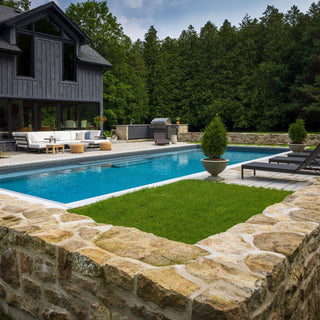
Image credit: Bruce Van Inwegen
The Roof of Tomorrow
What emerges from the conversation is an ongoing recalibration of expectations around rooftop spaces. They are no longer secondary, but increasingly integral to how urban environments function. Spanier summarizes this recalibration succinctly, describing it as “A commitment to the quality of place.”
For Green, that commitment increasingly includes ecological responsibility: “More sustainability; using native plants, supporting biodiversity, and using materials that respond to climate.” And for White, this dedication begins with openness: “Start with big ideas—explore different options early, then whittle it down to what’s right.”
Together, the perspectives put forward by Green, White, and Spanier—shaped by their combined expertise across design, architecture, and development—point to a clear direction: what may feel like emerging philosophies today are quickly becoming the standard practice of tomorrow.
Core Design Strategies
Understand Structural and Environmental Limits Early
Let load capacity, wind, and exposure guide design decisions from the outset.
Integrate Infrastructure From the Beginning
Plan for gas, water, drainage, and power early to avoid compromises later.
Design With Climate Responsiveness In Mind
Select materials and plantings that perform reliably in exposed conditions.
Program The Space, Not Just Furnish It
Define how the space will be used before selecting furniture or features.
Conceal and Integrate Necessary Constraints
Treat mechanicals and screening as part of the design, not afterthoughts.
Invest in Durable, High-Performance Materials
Choose quality systems that withstand use and weather over time.
Think in Zones and Experience Sequences
Organize space into distinct areas that guide movement and use naturally.
Meet The Speakers

PRESIDENT OF SPANIER GROUP
Rob Spanier

PRINCIPAL AT ZEN ASSOCIATES
Peter White

SENIOR ASSOCIATE AT HARRISON GREEN